How to Walk the Line Between Generosity and Benefiting From Local Sponsorships
There's a line between genuinely supporting your community and sponsoring local organizations for the marketing bump. Where exactly does it sit, and is it wrong for one sponsorship to accomplish both at the same time? Here's how I've come to walk that line as a small business owner and as a Christian.
Written by Matt Kelley · Owner, Peak City Web Design
The real question I keep coming back to
It's not "did my business benefit?" That framing traps you. Every honest partnership creates some benefit on both sides. If it didn't, the organization wouldn't offer it and the business wouldn't accept it.
The better question is: would I still care about helping this organization if no one ever knew my name was attached to it? If the answer is yes, the SEO benefit stops being the reason and starts being the byproduct. That's the line I try to stay on the right side of.
The uncomfortable question: am I helping, or just marketing?
I've wrestled with this one for years. Every time a local nonprofit reaches out about a sponsorship, or every time I notice an organization in our area that could use help, there's a quiet question sitting in the back of my head: am I about to support this because I care, or because I know it's good for the business?
And if the answer is "well, both," is that OK? Or does the fact that I benefit somehow poison the whole thing?
I don't think a lot of business owners talk about this openly, but I know I'm not the only one wondering. So I want to lay out how I've come to think about it, because I think the answer is more freeing than most small business owners realize.
What Matthew 6 taught me about motives
My faith shapes how I think about this. There are a few places in the Bible, most memorably Matthew 6, where Jesus talks about generosity. He says when you give, don't do it with trumpets so everyone sees you, because then the applause becomes your reward. And in another line, "do not let your left hand know what your right hand is doing."
Matthew 6 is focusing on where your heart is and where your focus is when you're being generous. If it's to point back to you, you're missing the mark. That's the whole thing. The applause isn't the sin. Chasing the applause is.
That took me a while to sit with, because for a long time I was hesitant about any sponsorship where my business name would show up at all. It felt like I was setting myself up for the exact thing Jesus warned about. But a sponsorship where both sides know what's happening isn't the same as trumpeting yourself for applause. It's an honest partnership. Nobody's being fooled about the arrangement.
Anonymous giving and public sponsorship serve different purposes
Both belong in the world. They just do different jobs.
Anonymous giving is its own thing. Nobody knows, nobody claps, the person or organization got what they needed and that's the end of the story. It's a beautiful form of giving.
Public sponsorship is a different tool with a different purpose. Nonprofits actively invite sponsors because the visibility sponsors get is part of how the nonprofit attracts more support next year. Little League doesn't put your logo on the jersey to reward you for being generous. They do it because they need next year's business to see this year's business supporting them. It's a working relationship, and everyone understands the deal going in.
So public sponsorship isn't a lesser version of giving. It's just a different mechanism that exists because both sides need something from each other. That framing helped me stop feeling weird about it.
How our partnership with SHIP Community Outreach came together
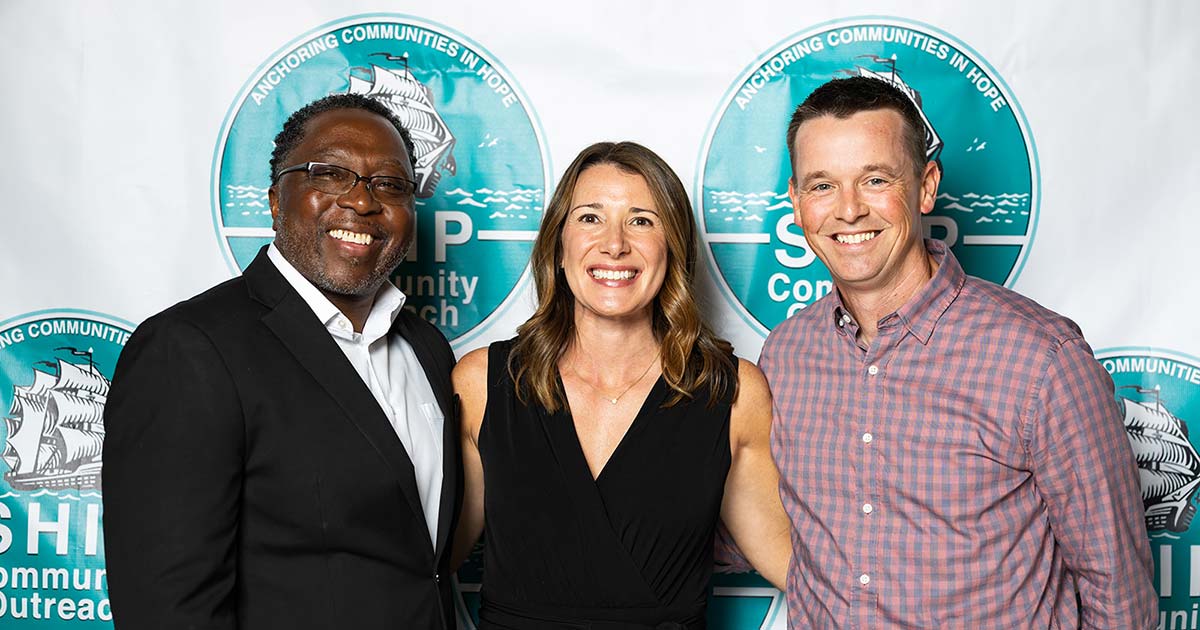
Here's a real example. A while back I was looking for a way to support SHIP Community Outreach, a nonprofit in Raleigh doing meaningful work in the community. My wife Brooke and I give when we can, but there are seasons where we're stretched thin on the money side. I know there are other ways to give (time, talent, service) and I started thinking about which one made sense for us.
Then I visited their website.
Right away it clicked. This was the best way I could support them. Their old site wasn't representing them well, and for a nonprofit that lives on donor trust, a website is one of the first things a potential donor evaluates. A better site had the real potential to lift their donor giving because it would make the whole organization feel more credible and professional to the people considering supporting them.
So we redesigned their site from top to bottom. In return, we get a small credit on the site as the designer. That credit can bring us new clients who like what they see. Both sides win. Their donors win. Our future clients win. Nobody loses.
Did I volunteer for this just so I could get a backlink from a Raleigh nonprofit's website? No. Would I have taken it on if there was zero business benefit at all? Honestly, probably yes for this one, because Brooke and I both connected with what they do. But I'd be lying if I said the backlink and the potential referral traffic didn't factor in at all. Both things are true at the same time, and I've stopped pretending they can't be.
Find the overlap between what they need and what you already do
One of the best moves a small business owner can make is realizing that the most valuable thing you can give an organization is usually not a check. It's the thing you already know how to do professionally.
A landscaper has more to offer a school garden than $200 does. An accountant has more to offer a small nonprofit's board than a raffle donation does. An auto repair shop that opens their bays for a free maintenance day for single parents in their community is giving something that would be genuinely expensive to buy, done by people who know what they're doing.
When your skill lines up with an organization's need, the value you deliver is worth many times the check you could have written. And the story is almost always more shareable, which means more visibility for both of you, which means the whole partnership compounds.
Before you write a check, ask: is there something I could do for this organization that would be more useful than the money?
How to pick organizations that fit your business
You can't support every worthy cause, so some filtering is going to happen whether you plan for it or not. Better to be intentional about it.
Questions I run through when I'm deciding:
- Who's your customer base? Not who you wish it was. Who's paying you today.
- Does this organization touch those same people? Same neighborhoods, same demographic, same life stage.
- Would supporting them feel natural to my customers? Or would it feel like a stretch that needs explanation?
- Do I care about what they do? If not, it'll feel hollow every time it comes up, no matter how good the SEO looks on paper.
Quick example: notice how many orthodontists sponsor youth sports and school events. That's not an accident. Kids in that age range are exactly who needs braces, and the parents watching them play are the decision-makers. The overlap is obvious and honest. That kind of alignment is the goal.
When your skills are the best thing you can give
Circling back to this because it changes what "supporting your community" even means for a small business owner. You don't have to be a big donor to give real value.
Take that auto repair shop example. Say the owner cares about single parents and families in tough spots. Many of those families are driving cars that need attention. A one-day service event where a few of those cars come in for oil changes and basic maintenance is a huge gift. It's the kind of story a local nonprofit would happily share on their channels. Local news outlets are always looking for good-heart stories from real neighbors. The whole thing is repost-worthy because it's genuinely useful, not because it's clever.
The visibility that comes out of a story like that is earned. It's not the reason you did it, but you don't have to feel weird about it either. You just did real work for real people, and the community saw it.
Grow your business so you can give more later
Here's the reframe I want to leave every small business owner with. If community involvement is what first catches your eye because you heard it can help your marketing, that's OK. Don't feel guilty about how you got here. Let it become an opportunity to do genuine good.
Your community can benefit. Your business can grow. And as it grows, you can give more later than you could have this year. That's not a compromise. That's how a healthy small business ends up making a bigger difference in its community over time than a business that either never gave or gave itself into the ground.
Generosity and good marketing don't have to conflict. When you find the partnerships where your skill lines up with a real need, they can be the same thing.
"Don't feel guilty if learning that community involvement can help your marketing is what first gets your attention. Let it become an opportunity to do genuine good. Your community can benefit, your business can grow, and as it grows, you may be able to help even more."
Want to explore this for your own business?
Local sponsorships are one piece of a bigger local SEO picture. If you're a Triangle small business owner thinking about how to be more visible in your community while doing work that actually matters, our full 8-step Local SEO playbook walks through how it all fits together.